
Clinical Application
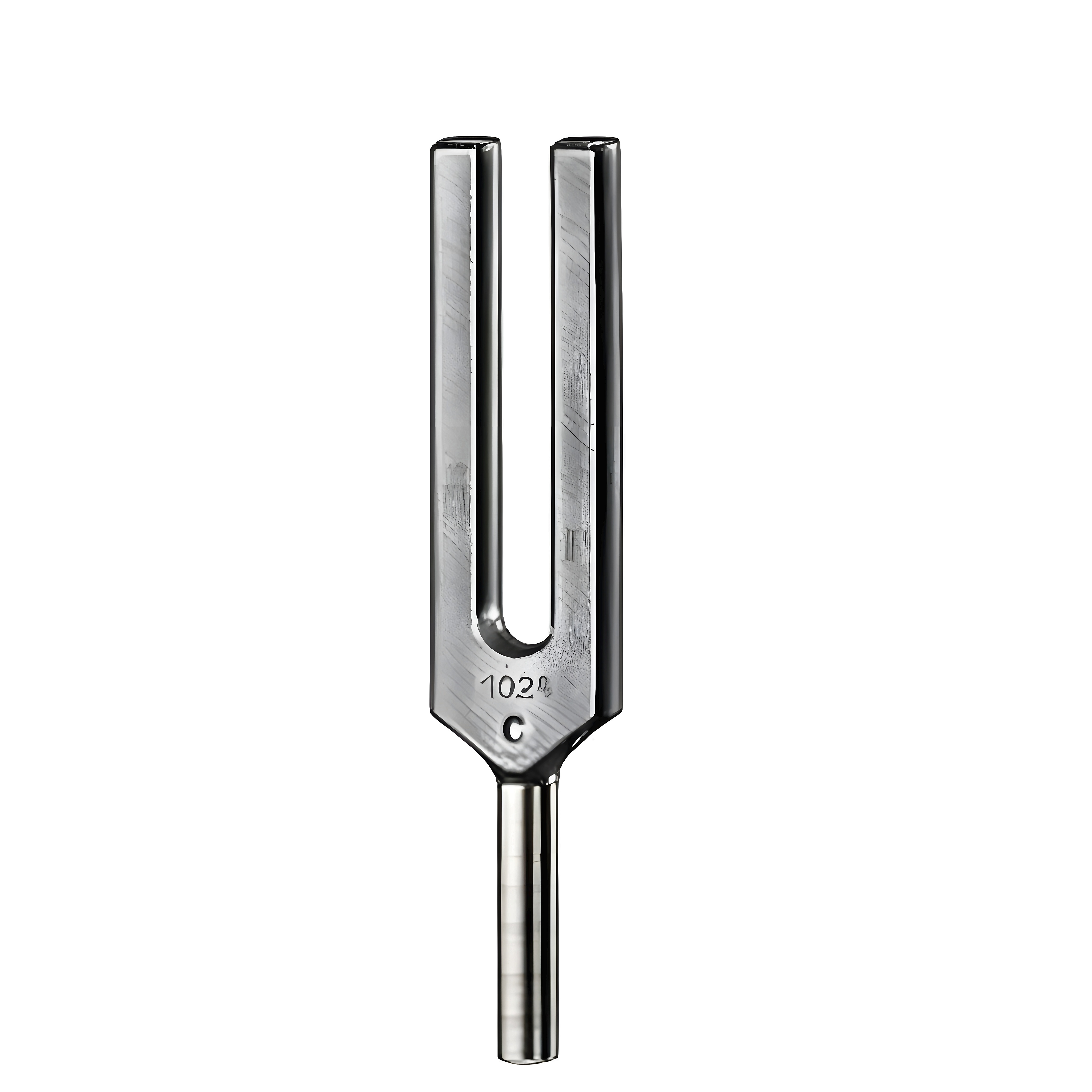
This tuning fork is intended for bedside and clinic-based audiologic and neurologic assessments. The C 1024 frequency is used for bone-conduction testing such as Weber and Rinne maneuvers to help distinguish conductive from sensorineural hearing loss, and for assessment of peripheral vibration sense in neurological examinations. Its clear, high-frequency tone provides a reproducible stimulus for comparative testing and documentation of baseline or follow-up status.
Design & Configuration
The instrument features the standard two-prong fork geometry with a rigid stem and ergonomic handle to allow controlled striking and placement against bony landmarks (mastoid, forehead, or limb). The two-prong design concentrates vibrational energy into a stable pitch; the stem transmits those vibrations reliably to bone for accurate bone-conduction assessment. The single-piece construction minimizes energy loss at joints and simplifies handling during rapid clinical testing.
Instrument Specifications
- Instrument type: Tuning fork
- Model: C 1024
- Frequency: 1024 Hz
- Configuration: Two-pronged, single-piece stem with handle
- Typical use: Weber and Rinne tests, vibration sense evaluation
- Material: Aluminum
- Reusable: Yes
Material & Construction
Constructed from aluminum for a lightweight feel and responsive vibration. The single-piece fabrication provides consistent tone and straightforward cleaning between uses. Clean and disinfect according to your facility's infection control protocols prior to patient contact.
Quality & Compliance
Manufactured by FDA-registered OEM facilities and produced under strict quality control standards.
Brand Comparison
Comparable in form and function to equivalent instruments offered by major US medical suppliers.
Availability & Returns
- In-stock lead time: ships within ~1 week
- Out-of-stock lead time: 2–4 weeks
- Returns: 30-day return policy