
Clinical Application
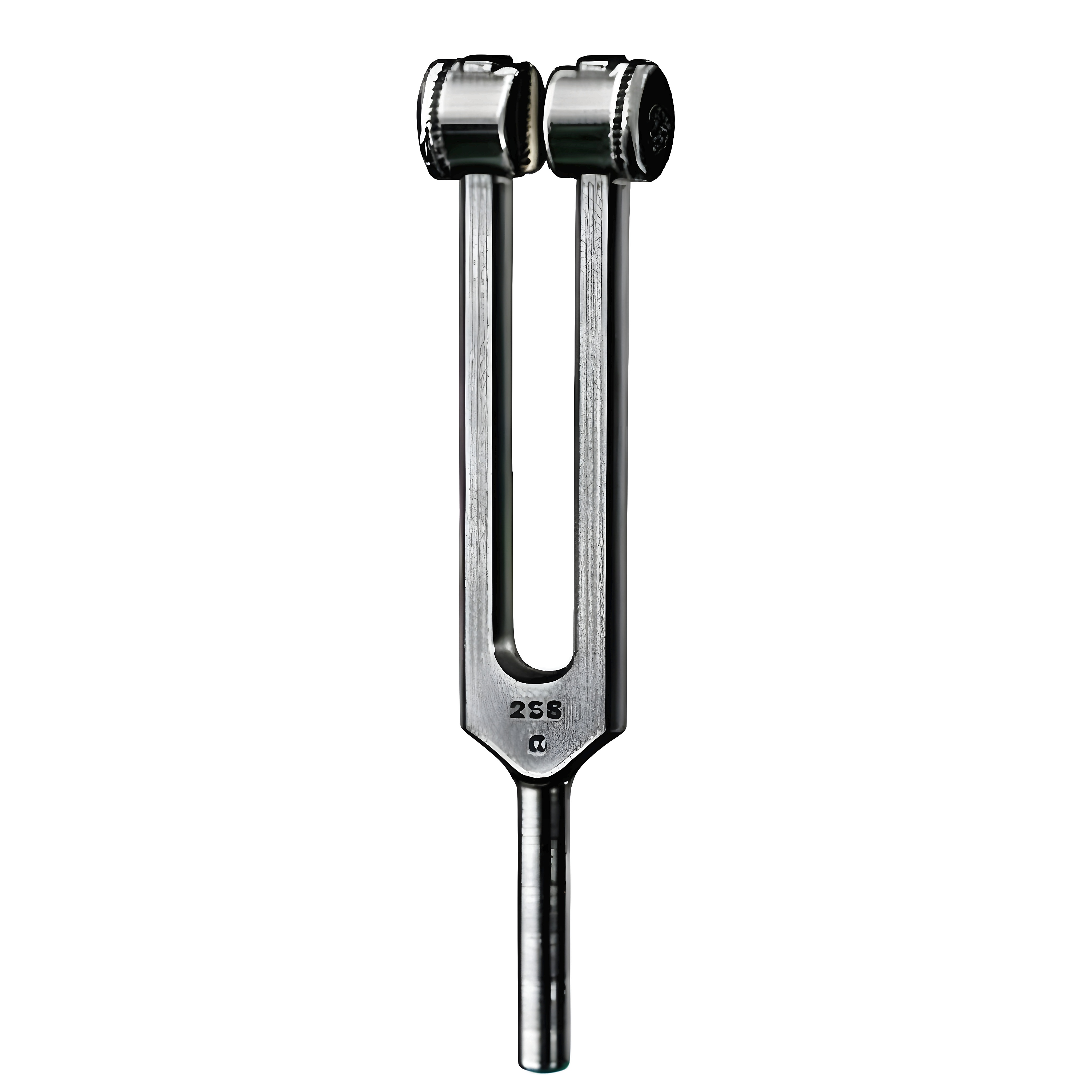
This C 256 tuning fork is intended for bedside and clinic use in ENT, audiology and neurology settings. It provides a reproducible 256 Hz tone for basic hearing screening (Weber and Rinne tests) to help differentiate conductive vs. sensorineural hearing loss and for assessment of vibratory sensation in peripheral neuropathy and musculoskeletal examinations.
Design & Configuration
The two-pronged fork with a solid stem produces a sustained, low-frequency vibration when activated by a firm strike. The 256 Hz pitch is well suited to bone-conduction testing: when placed on the mastoid or forehead the vibration is readily transmitted through bone, allowing clinicians to compare air and bone conduction quickly at the point of care. The simple stem provides a secure grip for precise placement on bony prominences during sensory testing.
Instrument Specifications
- Model: C 256 (256 Hz)
- Form: Two-pronged tuning fork with stem
- Primary uses: Weber and Rinne hearing tests; vibratory sense assessment
- Material: Aluminum
- Reusable construction
Material & Construction
Constructed from aluminum to provide a lightweight instrument with consistent vibratory properties. The metal construction is durable and allows for routine cleaning and decontamination per facility protocols. Reusable design supports repeated clinical use over time.
Quality & Compliance
Manufactured by FDA-registered OEM facilities and produced under strict quality control standards.
Brand Comparison
Comparable in form and function to equivalent instruments offered by major US medical suppliers.
Availability & Returns
- In-stock lead time: ships within ~1 week
- Out-of-stock lead time: 2–4 weeks
- Returns: 30-day return policy