
Clinical Application
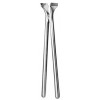
Designed for precise soft-tissue separation and elevation, this instrument is commonly used in otolaryngology, rhinoplasty/septoplasty, facial plastic surgery, and maxillofacial procedures. It is effective for undermining soft tissue, elevating mucoperichondrial and periosteal planes, freeing adhesions, and creating working pockets in confined anatomical spaces where controlled blunt or sharp elevation is required.
Design & Configuration
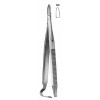
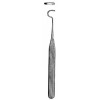
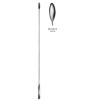
The double-ended Freer pattern combines a broad, blunt spatula on one end and a narrower, pointed elevator on the opposite end to support both atraumatic subperiosteal elevation and more focal tissue dissection without changing instruments. The straight shaft and 20 cm overall length provide extended reach for deeper dissections while maintaining tactile feedback and control in close quarters. This configuration reduces instrument exchanges and allows the surgeon to switch between blunt undermining and focused elevation quickly.
Instrument Specifications
- Pattern: Freer double-ended elevator/separator
- Configuration: Straight, double-ended
- Length: 20 cm overall
- Working ends: Blunt spatula and narrow pointed elevator
- Primary uses: Subperiosteal dissection, mucoperichondrial elevation, tissue separation in ENT and facial procedures
- Reusable construction
Material & Construction
Manufactured from surgical-grade stainless steel for durability, corrosion resistance, and repeated sterilization. Precision-formed working ends maintain edge geometry and consistent performance through reprocessing cycles. The instrument is intended for repeated use and routine sterilization per facility protocols.
Quality & Compliance
Manufactured by FDA-registered OEM facilities and produced under strict quality control standards.
Brand Comparison
Comparable in form and function to equivalent instruments offered by major US medical suppliers.
Availability & Returns
- In-stock lead time: ships within ~1 week
- Out-of-stock lead time: 2–4 weeks
- Returns: 30-day return policy