
Clinical Application
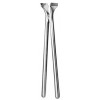
This diagnostic tuning fork is used in otology, audiology and neurology to evaluate bone conduction and vibratory sensation. When struck and placed on the mastoid process or forehead it supports Weber and Rinne assessments to help differentiate conductive from sensorineural hearing loss. The lower C256 frequency is also commonly employed for testing vibratory threshold at bony prominences when screening for peripheral neuropathy or monitoring sensory function over time.
Design & Configuration
The two-tine design with a central stem transfers a stable, sustained vibration to bone, enabling clear perception of bone-conducted sound and tactile vibration. The stem/handle offers a single-handed grip for controlled placement on small targets (mastoid, forehead, malleolus, tibia) and for repeatable strikes. The instrument's nominal 256 Hz pitch produces a lower-frequency vibration that is particularly useful for assessing vibratory sense at distal sites.
Instrument Specifications
- Instrument type: Diagnostic tuning fork
- Model: Lucae Tunning Fork C 256
- Frequency: 256 Hz (C)
- Configuration: Two-pronged fork with stem/handle for single-handed use
- Typical clinical use: Weber and Rinne auditory tests; vibratory sensation testing for neurologic exams
- Material: Stainless steel
- Reusable: Yes
Material & Construction
Manufactured from stainless steel for durability and consistent resonance. The tines are precision-formed to provide a steady, sustained vibration at the nominal 256 Hz pitch. Constructed for repeated clinical use and compatible with standard clinical decontamination and sterilization workflows.
Quality & Compliance
Manufactured by FDA-registered OEM facilities and produced under strict quality control standards.
Brand Comparison
Comparable in form and function to equivalent instruments offered by major US medical suppliers.
Availability & Returns
- In-stock lead time: ships within ~1 week
- Out-of-stock lead time: 2–4 weeks
- Returns: 30-day return policy