
Clinical Application
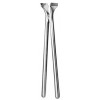
This two‑pronged diagnostic instrument is used for clinical assessment of hearing and vibration perception at the bedside and in clinic settings. Common applications include performing Rinne and Weber tests to differentiate conductive from sensorineural hearing loss, and testing vibration sense over bony prominences when assessing peripheral neuropathy or spinal cord function. It is suitable for use by otolaryngologists, audiologists, neurologists, primary care clinicians and in ambulatory surgery centers for preoperative screening.
Design & Configuration
The classic two‑tine geometry produces a stable resonant vibration when activated by a tap. The rigid stem serves as a convenient handle for positioning and transmits vibration cleanly to the clinician’s finger or directly to the patient’s mastoid, forehead, or other bony landmarks. This simple configuration provides reproducible tactile and auditory cues that aid rapid comparative testing of bone conduction versus air conduction and assessment of vibratory sensation.
Instrument Specifications
- Instrument type: Diagnostic tuning fork
- Pattern / model: Hartmann Tunning Fork C 64
- Configuration: Two‑pronged fork with stem/handle
- Typical use: Rinne and Weber tests; vibratory sensation testing
- Material / construction: Stainless steel
- Reusable
Material & Construction
Manufactured from stainless steel for durability and repeated clinical use. The single‑piece fork and stem design minimizes moving parts and facilitates cleaning. Reusable construction is intended for standard clinical reprocessing between patients.
Quality & Compliance
Manufactured by FDA-registered OEM facilities and produced under strict quality control standards.
Brand Comparison
Comparable in form and function to equivalent instruments offered by major US medical suppliers.
Availability & Returns
- In-stock lead time: ships within ~1 week
- Out-of-stock lead time: 2–4 weeks
- Returns: 30-day return policy