
Clinical Application
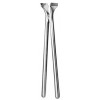
The Hartmann C 512 tuning fork is a diagnostic tool used in otology and general clinical practice for bedside hearing assessment. Its 512 Hz frequency is well suited to Rinne and Weber tests, helping clinicians distinguish conductive from sensorineural hearing loss, evaluate ossicular chain dysfunction, and perform quick pre- and post-operative comparisons. It is commonly used by ENT surgeons, audiologists, primary care physicians, and in outpatient or surgical center settings as part of standard auditory screening and follow-up.
Design & Configuration
The classic U-shaped, double-pronged geometry produces a sustained, easily perceived vibration at 512 Hz. The stem transmits bone-conducted vibration when placed against the mastoid process and allows accurate air conduction testing when held adjacent to the ear canal. The tuning fork's balanced prong geometry and mass distribution promote a clear decay pattern and reliable patient responses, which improves the consistency of bedside hearing assessments.
Instrument Specifications
- Instrument type: Tuning fork
- Pattern / model: Hartmann Tuning Fork C 512
- Configuration: U-shaped double-pronged fork with straight stem
- Frequency: 512 Hz
- Typical clinical use: Rinne and Weber tests for conductive vs sensorineural hearing loss
- Material / construction: Stainless steel
- Reusable: Yes
Material & Construction
Constructed from solid stainless steel for corrosion resistance and durable clinical use. The one-piece metal design provides predictable vibratory characteristics and is compatible with standard reprocessing protocols used for non-implantable diagnostic instruments.
Quality & Compliance
Manufactured by FDA-registered OEM facilities and produced under strict quality control standards.
Brand Comparison
Comparable in form and function to equivalent instruments offered by major US medical suppliers.
Availability & Returns
- In-stock lead time: ships within ~1 week
- Out-of-stock lead time: 2–4 weeks
- Returns: 30-day return policy