
Clinical Application
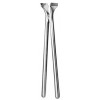
Low-frequency 128 Hz tuning forks are used primarily for assessment of vibratory sensation during neurological and podiatric examinations. This frequency is commonly employed in screening for peripheral neuropathy (for example diabetic neuropathy) and for bedside monitoring of large-fiber sensory function. The instrument provides a consistent vibratory stimulus for comparing sensation bilaterally and tracking changes over serial examinations.
Design & Configuration
The two-pronged (bifurcated) design with a single stem allows the clinician to produce a clear, sustained vibration by striking the tines and to apply the vibrating tine or stem to bony prominences. The tine geometry and mass distribution are tuned to produce a stable 128 Hz pitch with sufficient amplitude for cutaneous and periosteal vibration testing. The stem handle provides a secure grip for controlled placement and removal without damping the tines.
Instrument Specifications
- Instrument type: Tuning fork
- Model: Hartmann Tunning Fork c 128 (128 Hz)
- Configuration: Two-pronged fork with stem handle
- Typical clinical use: Vibration-sense testing for neurological and podiatric screening
- Reusable: Yes
- Material: Stainless steel construction for durable resonance
Material & Construction
Constructed from durable stainless steel to maintain consistent resonance and resist corrosion during routine clinical use. The fork is precision-balanced so the tines vibrate evenly; the solid stem transfers vibration reliably for contact testing. The design supports repeated use and routine clinical disinfection.
Quality & Compliance
Manufactured by FDA-registered OEM facilities and produced under strict quality control standards.
Brand Comparison
Comparable in form and function to equivalent instruments offered by major US medical suppliers.
Availability & Returns
- In-stock lead time: ships within ~1 week
- Out-of-stock lead time: 2–4 weeks
- Returns: 30-day return policy